
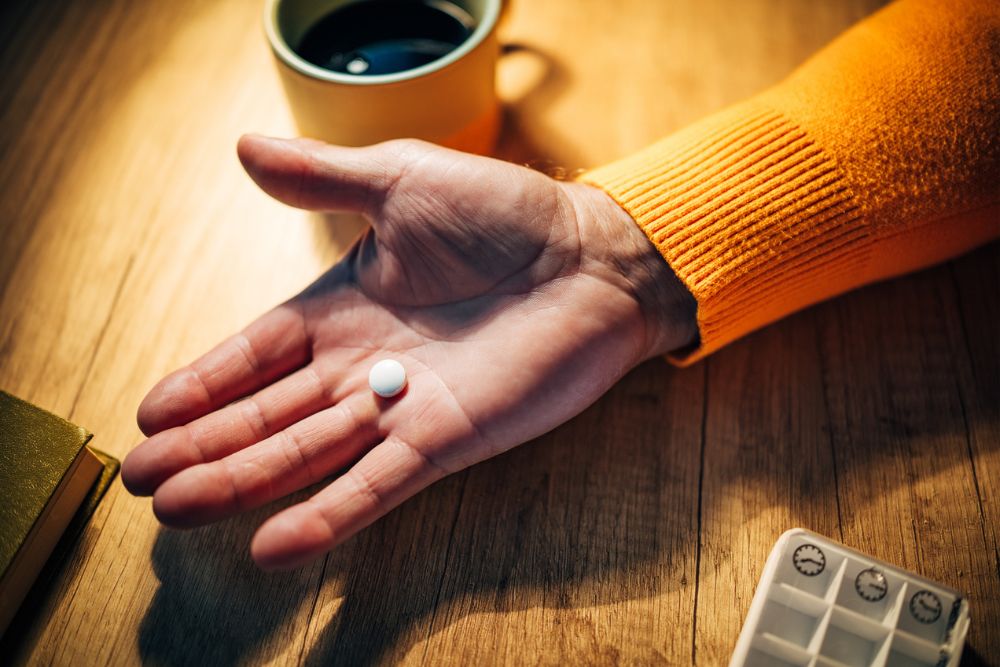
We all have the capacity to eventually get there—throwing out our backs in our thirties or caring for the sports injury of a teenage child—and suddenly opioid-based pain killers enter daily life. Each one of us is vulnerable to injuries or diseases that can cause constant, overwhelming pain, making medication a new lifeline.
But this can be troubling for anyone living in the wake of the opioid crisis, since taking that medicine can cause you to cascade into opioid use disorder (OUD).
Let’s walk through what dependence actually means, what raises your risk, and what you can do to stay safe—and if things start to feel out of control, St. Joseph Institute in Port Matilda can help you sort through it.
What Is Pain Pill Dependence?
Since opioids trigger endorphins in the brain, prescribed pain pills can create a strong sense of euphoria in addition to melting down your discomfort. If you continuously introduce those meds into your system (especially against professional guidelines), your body may start to cut down its natural endorphin production, leading to tolerance and cravings. Over time, you might start needing higher doses to find relief, or you may feel ill if you suddenly stop.
Cue pain-pill dependence, where your system becomes totally acclimated to opioids and outsources the production of your good-mood hormones to them.
This doesn’t automatically indicate a life-threatening situation or that you have a substance use disorder (SUD), but things can get out of control if you don’t exercise caution.
According to the American Journal of Psychiatry, millions of Americans have reported misusing prescription opioids at some point, especially during the height of the opioid crisis.
Here are some signs of dependence to watch out for:
- Needing higher doses to feel relief
- Taking doses earlier or more frequently than prescribed
- Habitually running out early
- Feeling noticeably ill if you skip a dose
If you see yourself in any of this, it’s a signal to talk with your provider, not spiral.
Prescription Dependence vs. Opioid Use Disorder
If you deal with serious, chronic pain, daily medication could help you perform at work, at home, and when you’re caring for your family. And thankfully, it’s possible to take opioid medication every day for reasonable lengths of time without developing a debilitating dependence.
In fact, according to the VA pain management guidelines, responsible use is a very concrete reality when you can do the following:
- Take medication exactly as prescribed
- Talk to your healthcare team about pain changes or the need for higher doses before you increase doses yourself
- Avoid alcohol or street drugs
- Let all providers know you take opioids, so you’re never getting duplicate prescriptions
- Store medication safely and dispose of extras to protect your household
Taking powerful meds every day while pairing them with these habits reflects structured pain management, not compulsive use.
OUD, on the other hand, looks very different. According to an Americans with Disabilities Act resource, OUD involves a pattern of opioid use that leads to significant problems at work, school, or home.
- You might keep using even when it harms your health or relationships, and cravings may start to drive decisions.
- OUD can involve prescription opioids or illegal ones like heroin.
- It can also affect major life activities such as thinking clearly, concentrating, or maintaining employment.
- It doesn’t generally involve any of the aforementioned preventative behaviors.
What Increases Your Risk?
According to the Mayo Clinic, opioids become more dangerous when you take them in any way that isn’t directly prescribed, like taking higher or more frequent doses, crushing or altering pills, or mixing them with other substances. Not only does this increase your risk for developing OUD, but it also increases your risk of overdose significantly.
The Mayo Clinic also notes that even short-term use can raise the chance of longer-term dependence. Opioids are so powerful that even after about 5 days of use, the likelihood of still using opioids a year from that start date increases.
Other risk factors the Mayo Clinic highlights include:
- Being younger, especially teens or early 20s
- Being a woman or inheriting certain genetic factors that increase SUD risk
- Personal or family history of substance use
- Depression, anxiety, or post-traumatic stress
- High stress or unstable life circumstances
- Heavy tobacco use
How to Lower Your Risk
First, take a breath. According to Harvard Health, most patients do not develop serious problems with opioids, especially when they use them for short-term pain and under medical supervision.
Here are some other ways to lower risks:
- Take opioids by the clock if prescribed long-term, rather than skipping doses until
- pain feels unbearable.
- Don’t wait for pain to spike and then chase relief since this may actually nudge the brain’s reward system toward dependence.
- Stay in touch with your doc consistently about your progress and well-being.
- Never stop suddenly without medical guidance.
- Opt for non-opioid options or therapies after the worst of the pain has subsided.
- Never share medication.
Find OUD Recovery Resources in Pennsylvania
Being prescribed pain medication doesn’t mean you’ll automatically develop OUD. Many people use these medications carefully and move on without long-term problems, especially when they stay honest with themselves and their providers.
If you start to feel uneasy about your use, that awareness can protect you. But, if things do derail, you can always enter residential OUD treatment with St. Joseph Institute in Port Matilda, PA. Nearby, our Wexford facility offers outpatient OUD treatment that can help you regain stability and build a healthier, substance-free life.
Contact us today to receive support.
